
Menu
Full Stump Removal in Framingham: Why It Costs More
Stump Removal Framingham
A common issue that homeowners face when trees are removed is what to do with the leftover stump; stump grinding can be a convenient option, but at times, there may be a need for total stump removal to achieve the desired result. Complete stump removal consists of removing all or most of the root system of the stump, which is different from only grinding the part of the stump that is above ground. In Massachusetts, this can cost anywhere from $700 to $800, compared to the cost of a simple stump grinding service. Learning about the full scope of the process will help homeowners understand their options and decide how best to maintain their property.
What is Involved in Removing an Entire Stump?
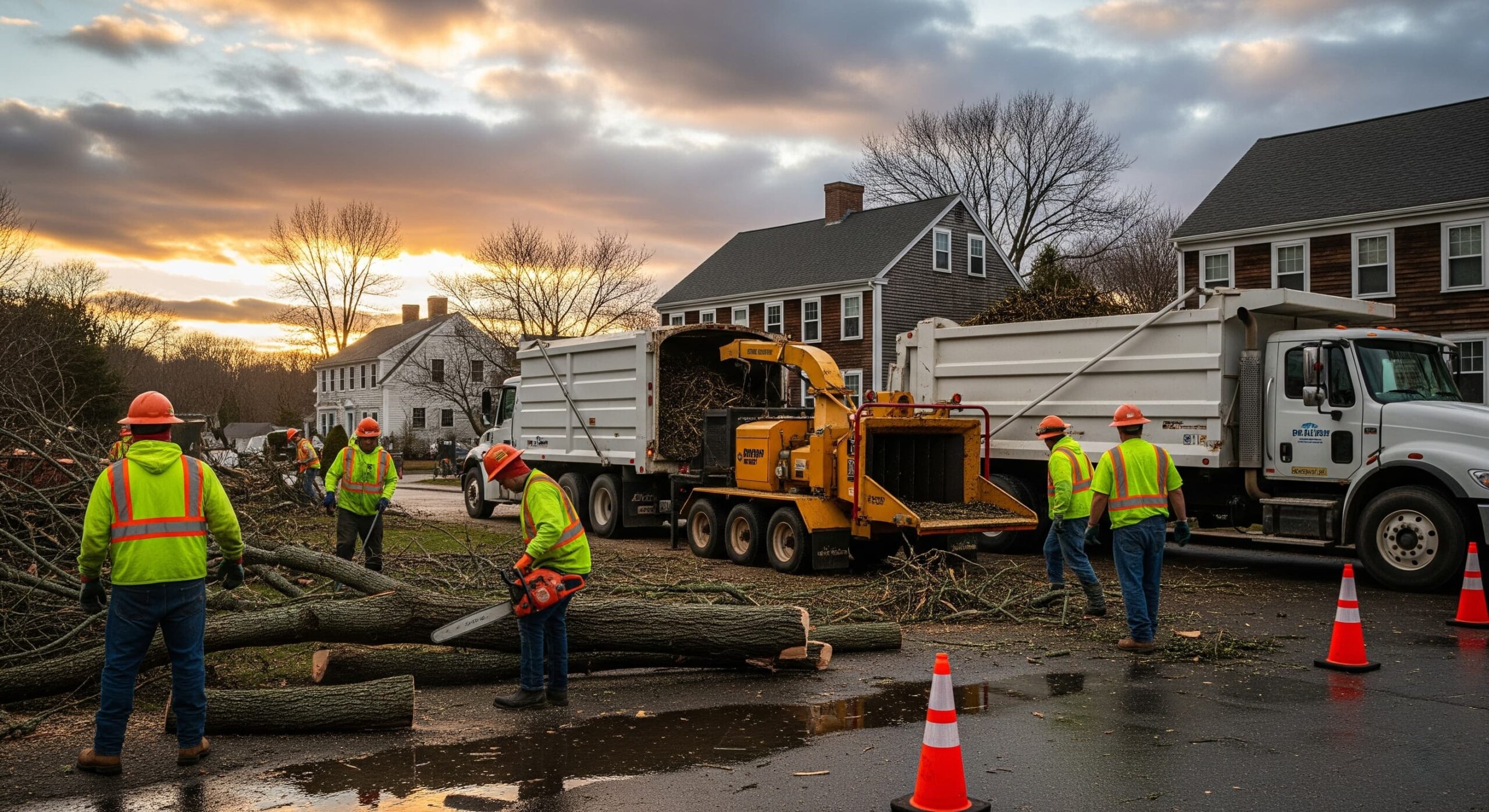
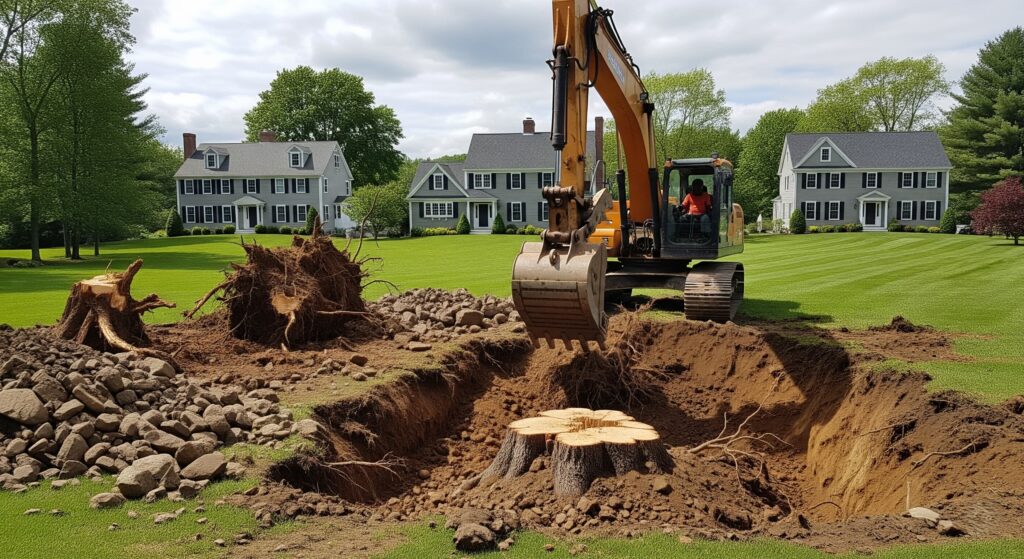
Removing an entire stump involves the complete excavation of the stump and its entire root system. First, the crew will evaluate the size of the root system and identify possible obstructions (such as utility lines) and/or nearby structures. Then, using a combination of backhoes and/or excavators, they remove the dirt around the stump to reveal all of the larger roots. Each root must then be cut and removed before the main trunk of the stump can be removed from the ground.
As you might expect, this process requires a great deal of site preparation and protecting the surrounding landscape. The crew must take care to navigate around the existing plants, utilities, and nearby structures; therefore, safety precautions are taken to protect your property and neighbors from potential harm.
Equipment Needed to Remove an Entire Stump
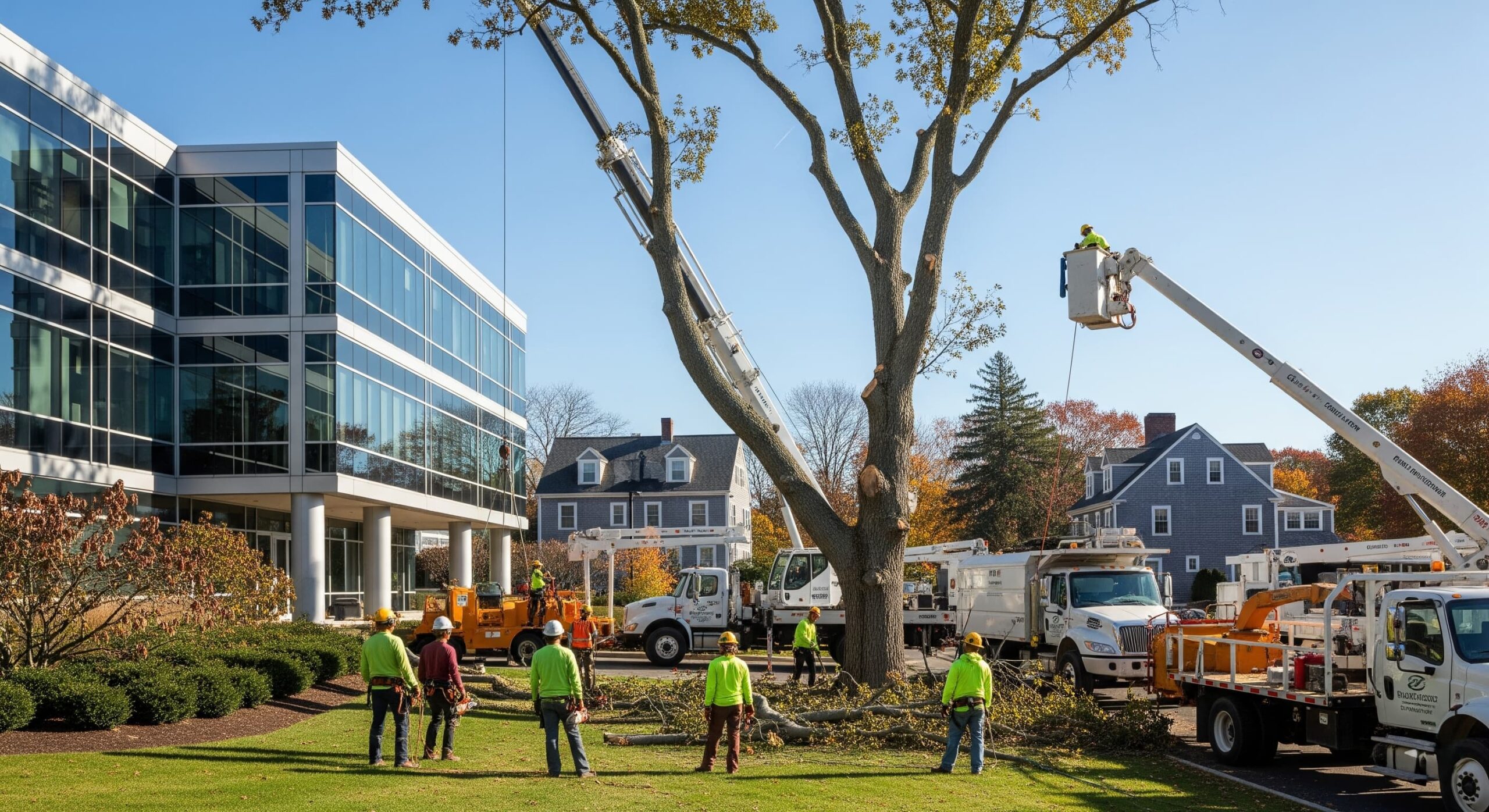
To remove a complete stump, you will need more equipment than what would be used for just grinding the stump. Therefore, the cost to remove a complete stump is typically much higher than just grinding the stump. You will need heavy-duty equipment such as backhoes, excavators, and/or other equipment designed specifically for the removal of stumps. To do the job efficiently, you will also need multiple machines to help move dirt around, extract roots, etc. Therefore, the cost to hire professionals to remove a stump completely is likely to be much more than if you were to grind it yourself.
Why Does it Cost so Much More to Remove a Stump Completely Rather than Grind It?
Grinding a stump and removing a stump completely are very different jobs. Removing a stump completely is a lot more labor-intensive and takes longer to accomplish than stump grinding. A complete removal of a stump in Massachusetts usually ranges anywhere from $700 to $800, whereas grinding a stump usually only ranges anywhere from $150 to $300. Additionally, complete removals typically take an entire day to finish, whereas grinding a stump usually only takes about 1-2 hours. As well, having multiple workers working at the same time with the extra equipment increases the cost greatly.
In addition to the increased cost due to the equipment and labor, there are also additional costs associated with restoring the site after the removal. After a complete removal, the area where the stump was located has been completely dug out, which leaves behind a large amount of dirt and roots. As a result, you will have a large pile of debris to dispose of and possibly recycle. You will also have a large hole to fill with good-quality soil. Finally, you may need to pay for lawn restoration, depending on how much of the lawn has been damaged during the removal.
Comparison of Labor and Time Required for Grinding vs. Complete Removal
Typically, removing a complete stump requires 6-8 hours of labor, as opposed to grinding a stump, which usually only takes 1-2 hours. Multiple crew members work together to remove the stump and roots, and to remove the debris left behind. The longer timeframe required to complete a removal indicates that the complete removal method is a much more thorough method of stump removal than grinding.
When is a Complete Removal Preferred to Grinding?
There are a few instances when the added expense of complete stump removal is justified. If you are looking to build a home or a swimming pool, or even start a new landscaping project, you may want to remove the entire stump and root system to give you a clean slate. Other examples of when complete removal may be preferred are when you plan to put new trees in an area previously occupied by another tree, or if you are a commercial developer who wants to ensure that there are no underground root systems that could interfere with your development. Homeowners who are considering major renovations to their homes in areas such as Framingham Center or Nobscot may opt for complete removal to allow for easier access to the area.
Uses for Complete Removal in Construction Projects
New buildings and construction projects require solid foundations that do not contain underground root systems that can cause the foundation to settle or decompose over time. Therefore, complete removal is always recommended to provide a clean slate for construction. Developers and builders almost always request the complete removal of stumps and roots when starting a new development project.
Drawbacks of Complete Removal
While complete removal is a more thorough method of stump removal, there are some drawbacks to consider. The removal process can potentially destroy the surrounding landscaping and may negatively impact nearby plants or structures. Also, if the soil is rocky or if there are overhead obstructions or tight spaces, the removal process can become more difficult and costly. Additionally, complete removal may not be feasible in certain areas where there are underground utilities or other obstructions that limit access to the area.
Property Access and Equipment Limitations
In many cases, the removal process may be impeded by narrow gateways, overhead obstructions, or uneven terrain that limits access to the area. In addition, complete removal may also damage nearby landscaping or recently installed features if not done properly. Therefore, contractors need to assess the site conditions prior to offering complete removal services.
Requirements for Restoring a Site After Complete Removal
After a complete removal, there will be a significant hole that must be professionally filled with quality topsoil and compacted to create a stable surface that can support a lawn or future planting. Restoration of a site after complete removal includes testing the soil, making recommendations for amendments to improve the soil, and sometimes seeding or sodding the lawn to restore it. The restoration process can add additional time and money to the overall cost of the removal; however, the restored surface will be capable of supporting a lawn or future planting immediately.
Considerations for Soil Quality and Drainage
Adequate backfilling requires consideration of soil composition, drainage characteristics, and compaction levels. Contractors who have experience with local soils throughout the MetroWest region of Massachusetts know what type of fill material is best suited for the area being backfilled. Contractors also know how to design the drainage for the backfilled area to prevent water from accumulating in the area.
Impact of Complete Removal on the Environment
Complete removal produces a significantly greater volume of waste than grinding a stump. Therefore, contractors must have environmentally responsible methods of disposing of and recycling the waste generated by complete removal. Organic waste generated by the removal of a stump must be disposed of according to local environmental regulations. Many contractors have programs that recycle the waste generated by complete removal and convert it into mulch, compost, etc. While the removal of a stump can cause temporary disruptions to the environment, such as disrupting soil microorganisms, altering drainage patterns, and affecting nearby plants, contractors attempt to minimize these effects through careful work practices and proper restoration procedures.
How to Choose Between Grinding and Complete Removal for Your Property
Whether you choose to have a stump completely removed or simply have it ground will depend on the specifics of your property, your plans for your property, and your budget. Complete removal is generally recommended for properties that have a large renovation planned or where a new lawn will be planted, because it provides the ultimate clean slate for construction or planting. However, if you are simply looking for a way to remove the unsightly remains of your old tree and are not concerned about the long-term benefits of removing the roots, grinding the stump is probably a less expensive alternative.
It is highly advisable to consult with a qualified contractor to determine the best option for your particular situation and needs. Site assessments are made to determine whether the removal can be completed based on accessibility, soil conditions, and surrounding features that could affect the feasibility and cost of the removal.
Framingham Tree Experts
At Framingham Tree Experts, we provide comprehensive stump removal services to residents throughout the MetroWest region of Massachusetts. Our team of experts will work with you to determine the best solution for your stump removal needs. Whether you prefer to have your stump completely removed or if you would like to simply have it ground, we utilize professional-grade equipment and techniques to complete the task efficiently and effectively.
LATEST POSTS