Menu
Early Signs of Tree Disease Framingham Homeowners Must Know
Tree Disease Treatment Framingham
Identifying early signs of a disease in your trees allows you to get the proper tree disease treatment as soon as possible before the issues are irreversible or threaten the lives of valuable landscape trees on your property in Framingham. Trees in Massachusetts suffer from an abundance of fungal, bacterial, and pest-related diseases, which can destroy a whole property if they go untreated. The earlier you catch the signs of a disease, the better chance you have at treating it successfully. As well, catching the problem early will save you money in the end because you will not have to replace the tree or repair damage caused by the disease. Arborists stress how important it is to monitor your trees regularly for small changes that could be indicative of an emerging disease issue. When you know what signs of a disease look like, you will be able to tell the difference between the normal seasonal changes in a tree versus serious disease conditions that need to be treated right away.
Leaf Symptoms and Abnormalities
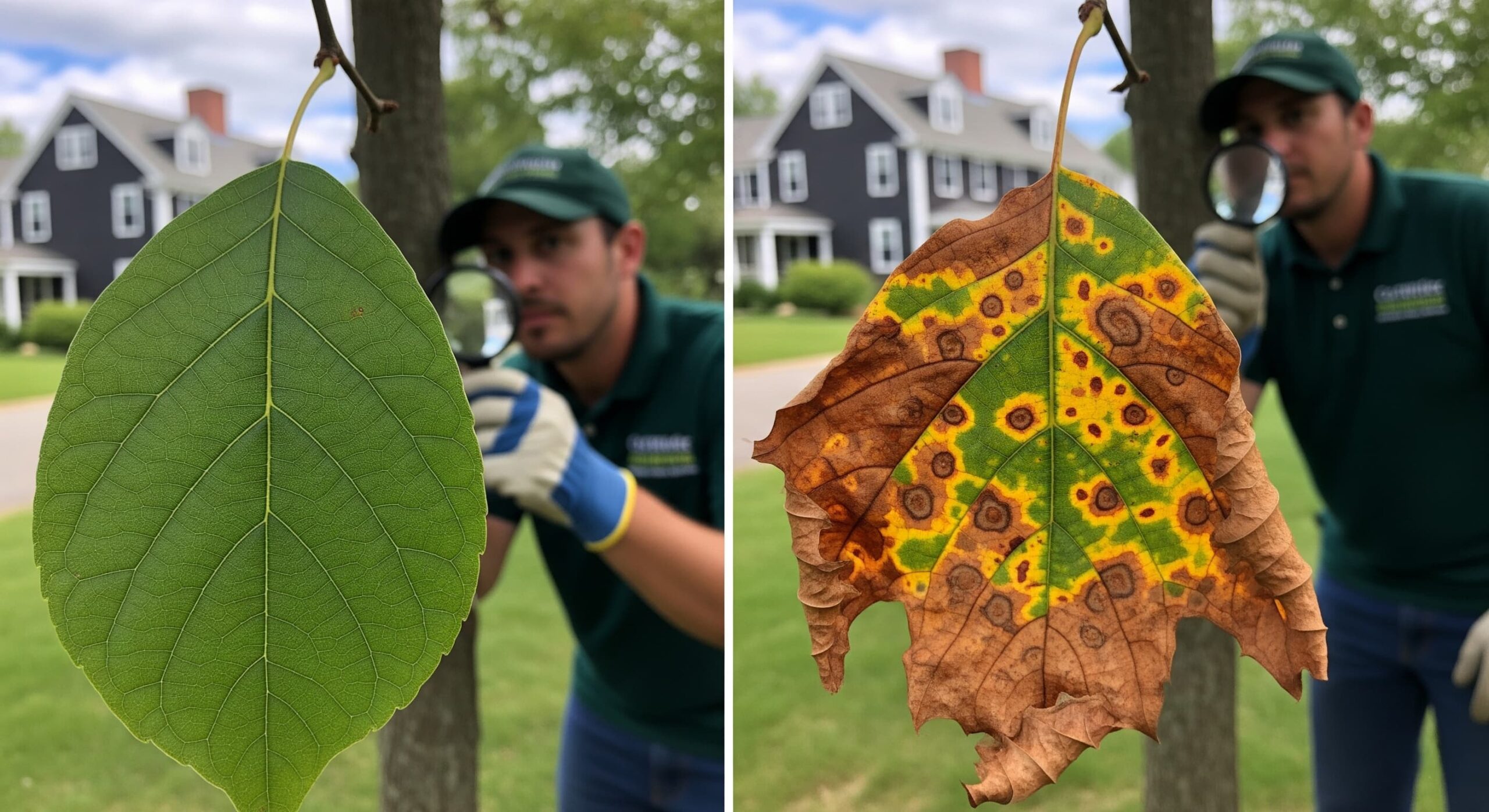
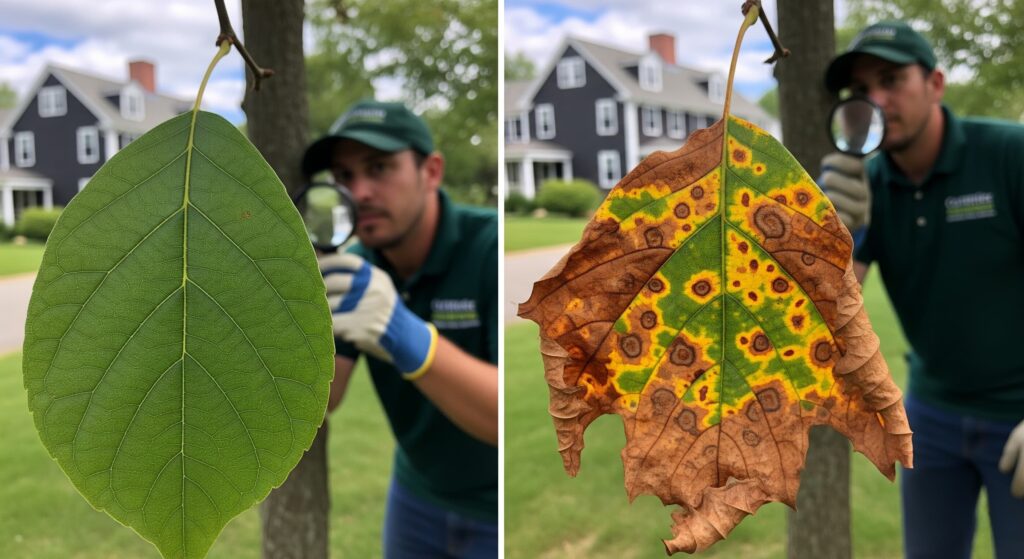
Leaves are usually the first part of a tree to display symptoms of illness; they can develop weeks to months prior to the emergence of the more severe symptoms of the disease. The majority of fungi that infect leaves produce unique circular (round), irregular blotchy, or unique patterns that differentiate them from normal leaves. Yellowing, browning, or defoliation in mid-summer to fall is abnormal and may signal an unhealthy condition that warrants an expert inspection.
Leaf scorch symptoms will show up as the drying and browning of the edges of leaves progressing toward the center of the leaf. This type of damage usually indicates the tree has root issues, is suffering from drought, or has been infected with vascular diseases. Powdery mildew creates a white, fuzzy coat on leaf surfaces, while anthracnose creates random brown or black spots and may lead to early defoliation. If the tree appears to be wilting during times of adequate water supply, it likely suffers from root rot or vascular system clogging that necessitates prompt attention.
Fungal Diseases That Affect Leaves
As mentioned previously, some of the most common leaf diseases found in Massachusetts are:
- Apple scab, a disease that affects crabapples in Framingham, produces small dark-brown spots with fringes that have developed on the leaves, and can severely defoliate trees.
- Beech leaf disease was recently discovered in Massachusetts and presents itself with dark bands between leaf veins, eventually causing curled, leathery leaves.
- Cedar apple rust develops orange spots on apple and crabapple leaves during the spring and requires special tree disease treatment procedures.
Trunk and Bark Abnormalities
Abnormal bark development often indicates significant internal problems that could compromise the structure of the tree and its likelihood of surviving. Cankers are sunken, discolored areas on the surface of the bark and may ooze sap or other fluids. Cankers can girdle branches and trunks, cut off the flow of nutrients to those areas, and ultimately kill the affected portion of the tree.
Any unusual growths, swelling, or cracks in bark surfaces could also indicate bacterial or fungal diseases that require professional diagnosis. If the peeling of bark is happening outside of the typical seasons of tree growth, it may be indicative of either disease activity or environmental stress. Wet spots, dark staining, or prolonged moisture on the bark are all indicative of bacterial diseases or internal decay processes.
Recognizing Serious Bark Damage
Tree bark damage caused by fire blight presents itself as a charred or blackened appearance, primarily on fruit trees and ornamental plants. Diseases such as root rot can create soft, discolored, or brittle bark near the soil line and require immediate attention. Failure to properly heal mechanical damage to the bark can create pathways for disease organisms to enter the tree and require protective treatment to prevent the spread of the disease.
Dieback of Branches
The progressive loss of branches is generally an indication of a systemic disease problem that can potentially threaten the life of the entire tree unless treated with the correct tree disease treatment. Typically, dieback starts at the ends of the branches and moves outward toward the central stem of the tree, creating recognizable patterns of damage that can assist in identifying the specific disease issue. The sudden wilt of large portions of branches during the growing season is a good indicator of major vascular-system damage.
Twig Blight and Cankers
Twig blight creates dead, dry twigs that do not fall off the branches like dead twigs normally would. Branch cankers create localized death that may move into healthy tissue adjacent to the canker if left untreated. Branch dieback throughout a canopy of trees often indicates a root-related disease or systemic disease issue that requires an integrated approach to treatment.
Warning Signs of Root Damage
While root-related disease activity is occurring below ground, there are often symptoms above ground that may seem unrelated but actually are indicative of root damage. For example, mushrooms or fungal growth near the base of the tree are indicative of advanced root rot, which can put the tree at risk of both collapse and death. Heaved, cracked, or otherwise settled soils surrounding the base of the tree are indicative of root-system degradation or disease.
In addition, reduced tree growth rates, smaller leaf sizes, and decreased tree vitality are indicative of compromised root systems. Additionally, trees with root disease may demonstrate leaning, poor canopy development, or exhibit instability under normal climatic conditions. Early recognition of root problems allows for treatment programs that may save the tree.
How to Identify Root Rot
White fungal growth on roots or soil surfaces is indicative of root rot diseases commonly encountered in Massachusetts’ landscaping communities. Mushrooms or strong, earthy odors near the base of the tree are indicative of advanced decay processes. If roots are exposed and appear dark, soft, or easily broken, there is a serious disease problem that warrants immediate professional evaluation.
Seasonal Disease Activity in Massachusetts
Massachusetts’ climate creates predictable disease cycles, helping property owners to know when to monitor for specific symptoms. During the spring, cool, moist conditions encourage the development of fungal diseases that infect new growth. Summer heat creates ideal conditions for a variety of opportunistic diseases. Moisture during the fall, combined with stress caused by seasonal changes create conditions for the development of late-season diseases.
The specific timing required for treating cedar apple rust to prevent summer symptoms dictates the need for specific tree disease treatment protocols. Anthracnose diseases thrive during wet spring conditions and require early intervention for maximum control. Understanding these seasonal patterns can enable property owners to monitor trees during peak disease activity.
Disease Risks for Specific Tree Species
Property owners should recognize that different species of trees common in Framingham landscapes are subject to specific disease risks that they should be aware of. For instance, beech trees, common in established residential areas, are becoming increasingly susceptible to beech leaf disease, which has spread rapidly throughout Massachusetts since 2020. Oaks are at risk from anthracnose, oak wilt, and several types of root rots that require different treatment methods.
Trees such as hemlocks are plagued by hemlock woolly adelgids that produce white, cotton-like masses at the base of needles. Apple and crabapple trees are prone to developing scab diseases in the spring, necessitating preventative treatment. Various rust diseases affect eastern red cedar and juniper species and may require treatment of multiple host species.
Monitoring High-Risk Species
If you suspect your ash trees are being attacked by the emerald ash borer, you should contact a certified arborist right away. Look for symptoms such as D-shaped exit holes, widespread crown dieback, and bark splitting. Pine species are susceptible to needle cast diseases and can demonstrate premature needle drop, yellowing, or browning needles that remain attached to the branch. Maples can develop a range of leaf spot diseases, verticillium wilt, and anthracnose.
Environmental Stresses That Weaken the Immune System of Trees
Environmental stresses reduce the strength of a tree’s immune system and increase its susceptibility to disease problems throughout Framingham landscapes. Prolonged drought, soil compaction, and damage to the root zone of a tree can each create stress that makes the tree susceptible to opportunistic diseases. Physical damage to a tree, whether from construction, grading changes, or soil contamination, can create disease problems years after the original damage occurred.
Winter salt damage to trees from street and driveway deicing can create stress that increases the tree’s susceptibility to a range of diseases. Urban air pollution can weaken a tree’s defense against fungal and bacterial pathogens. Proper management of environmental stress can greatly reduce a tree’s susceptibility to disease.
Expert Diagnosis and Evaluation
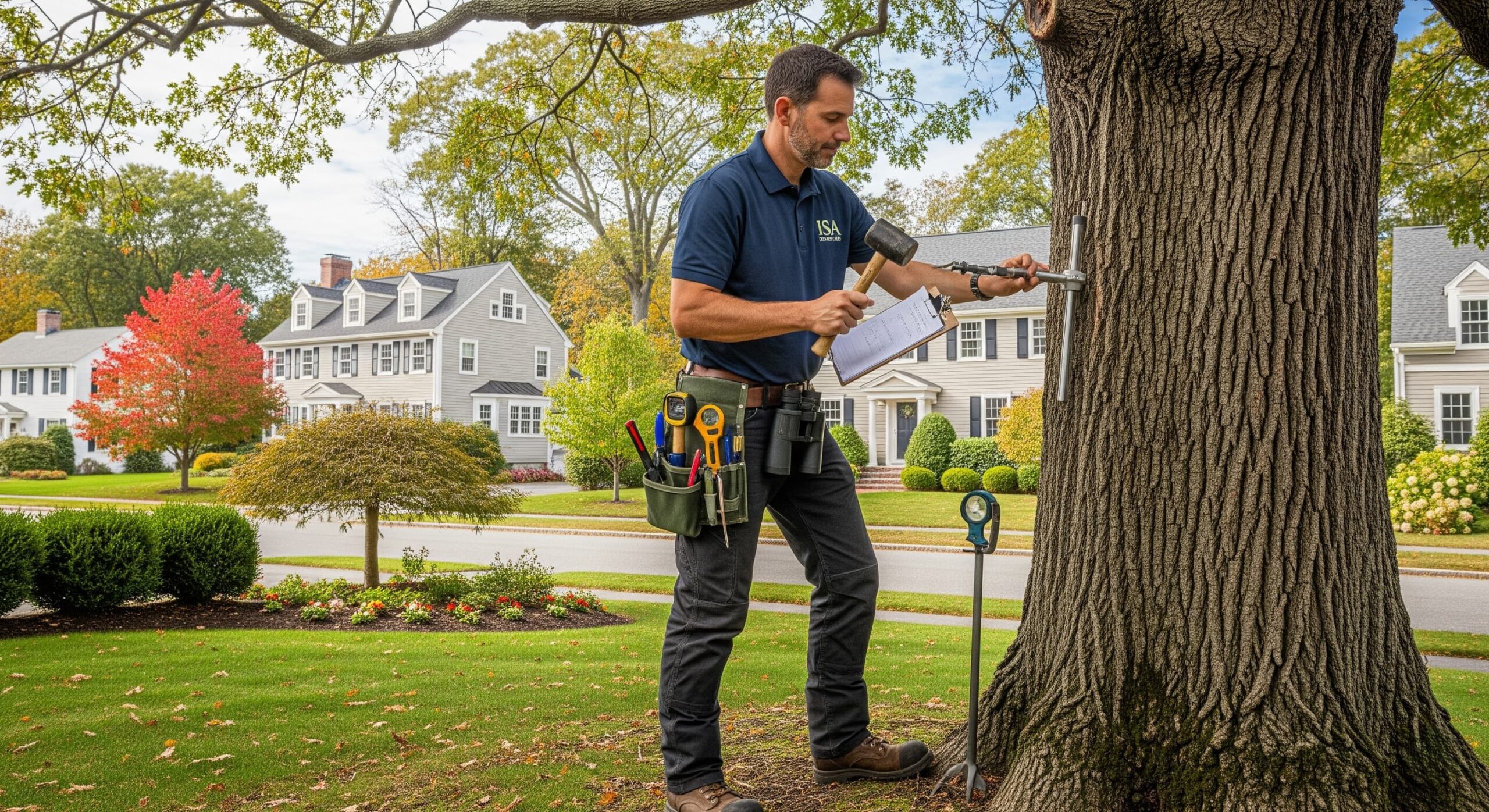
A correct disease diagnosis by an expert requires specialized training and equipment to distinguish between disease symptoms that are similar yet caused by different underlying causes. Certified arborists utilize their extensive knowledge, diagnostic equipment, and laboratory testing when necessary to accurately diagnose the disease problem. An expert evaluation includes assessing the environmental factors, the tree’s history, and site conditions that contribute to disease development and treatment efficacy.
Homeowners must have their trees evaluated by professionals because many disease symptoms appear indistinguishable to the layperson, thus requiring professional assistance to apply the correct tree disease treatment. Inaccurate disease diagnosis can lead to the application of ineffective treatments, wasting dollars, and allowing diseases to continue their progression.
Comprehensive Evaluations
Certified arborists offer comprehensive evaluations of tree health that identify multiple disease problems that require a coordinated treatment plan.
Advanced Diagnostics
Arborists may employ a range of diagnostic tools, including soil testing, tissue sampling, and microscopic examination, to confirm disease diagnoses. Laboratory tests can identify the specific pathogens and determine the most effective treatment options. Some of the more advanced diagnostics used include root excavation, core sampling, and specialized imaging to evaluate the internal health of the tree.
Timing for Treatment
Early treatment significantly improves the chances of successful tree disease treatment and minimizes the long-term costs and potential for tree replacement. Many fungal diseases are responsive to preventive treatments that are applied before symptoms occur, while bacterial diseases may require more aggressive intervention strategies. Treatment timing that aligns with the natural cycles of disease will maximize efficacy while minimizing negative impacts on the environment.
Growing-Season Timing for Treatment
When using systemic treatments, it is generally best to apply them during the tree’s active growing period when the tree is able to distribute the treatment materials within the tree’s system. Foliar treatments require specific timing relative to the growth stage of the tree and prevailing weather conditions. Timing for root-zone treatments depends upon the condition of the soil and the seasonal patterns that affect the absorption and translocation of the treatment materials.
Long-Term Tree Health Maintenance
Maintaining tree health through proactive tree health management practices can prevent many disease problems while maintaining the tree’s ability to resist environmental stresses. Providing trees with proper watering, fertilization, and soil maintenance can promote the immune function of the tree. Regular pruning of trees will remove diseased tissues and improve air movement, thereby reducing the disease-favorable conditions associated with dense foliage.
Selecting the Right Site and Tree Species
Avoiding many disease problems by selecting the right tree species for the location where the tree will grow can also help to minimize disease development. Maintaining the tree’s growing space, avoiding soil compaction, and protecting the root zone of the tree during construction activities will help to maintain tree health over the long term. Programs designed by professionals for ongoing tree health monitoring, prevention treatments, and early intervention will provide the most benefit.
Know When to Call a Professional
You should call a certified arborist as soon as possible when you observe any of the following:
- Sudden changes in the appearance of your tree(s)
- Rapid onset of symptoms
- Multiple trees in your landscape exhibiting the same symptoms
All symptoms that affect the structural integrity of a tree, such as branch dieback or trunk damage, warrant a professional evaluation. Early treatment will yield the best results for the successful treatment of tree diseases.
A certified arborist can help to determine whether a treatable condition exists vora situation where tree removal is the safest course of action. A comprehensive treatment program will address the underlying causes of the disease and effectively manage the symptoms. Routine professional monitoring can detect problems at an early stage, when treatment options remain the most effective and cost-efficient.
For professional tree disease treatment in Framingham, property owners can trust our certified arborists, who understand the regional disease pressures and the most effective treatment options available. With experience and knowledge of the regional disease pressures, Framingham Tree Experts provides a comprehensive health evaluation, accurate diagnosis, and an effective treatment program to protect your investment in your yard and neighborhood in the MetroWest area.
LATEST POSTS